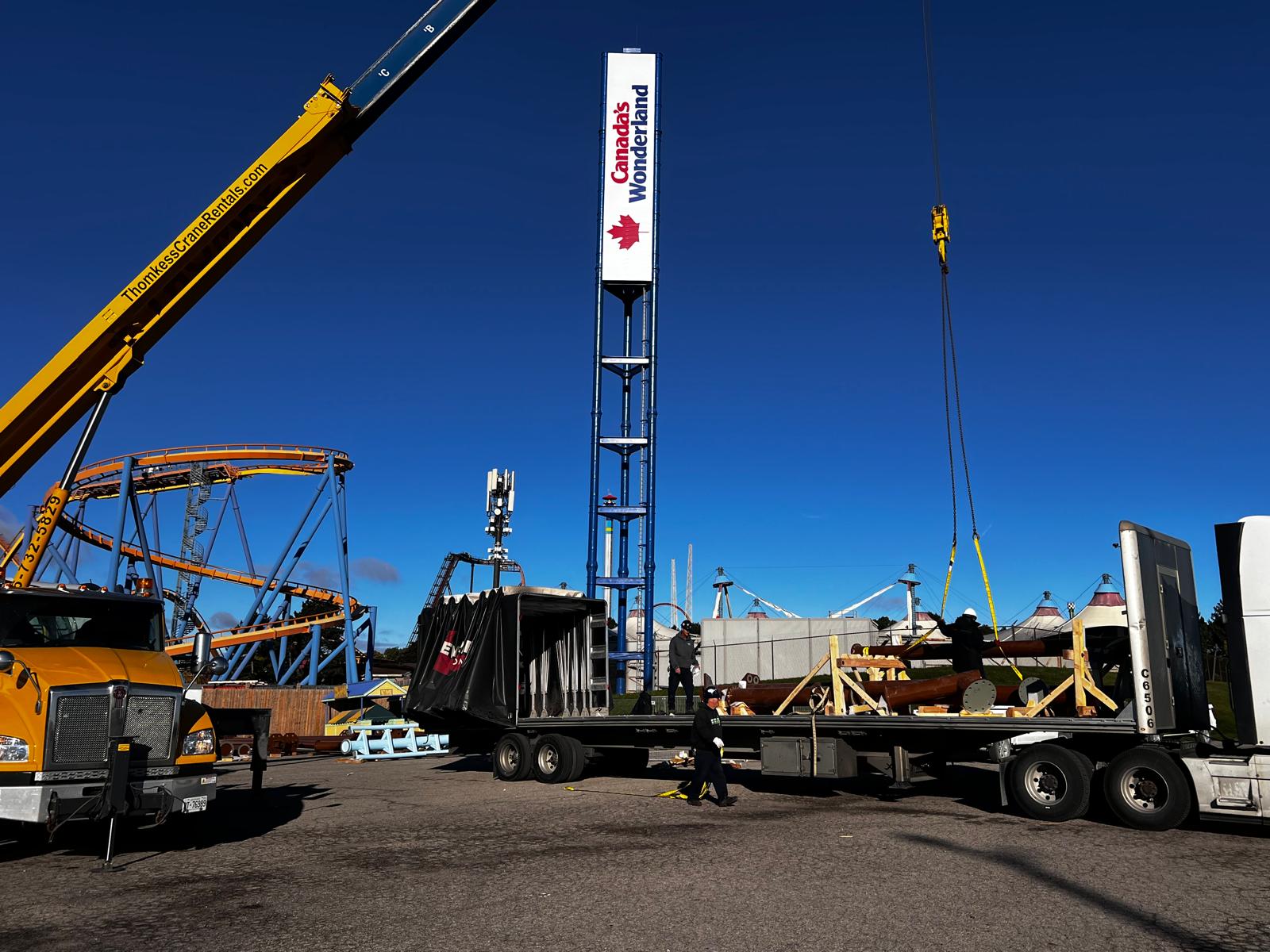
Just Ship It Logistics coordinated the delivery of approximately two flatbed loads of fabricated steel components and long structural assemblies to Canada’s Wonderland in Vaughan, Ontario. The August 2026 project involved open-deck transportation and crane-assisted unloading, with individual components lifted directly from the trailers and staged within the amusement-park worksite.
| Detail | Project Information |
| Project Type | Specialized flatbed / project freight |
| Industry | Amusement and entertainment infrastructure |
| Destination | Canada’s Wonderland, Vaughan, Ontario |
| Cargo | Fabricated steel components and long structural assemblies |
| Number of Loads | Approximately 2 flatbed loads |
| Longest Components | Approximately 45 ft |
| Estimated Cargo Weight | Approximately 40,000 lb combined* |
| Equipment | Open-deck flatbed trailers |
| Unloading Method | Mobile crane, piece-by-piece unloading |
| Delivery | August 2026 |
| On-Site Operation | Crane-assisted unloading completed during the scheduled delivery operation |
| Destination Constraint | Delivery and crane access within an amusement-park worksite |
| Outcome | Components delivered and staged at the Canada’s Wonderland project site |
This project required the transportation of multiple fabricated steel components and long structural assemblies to Canada’s Wonderland in Vaughan, Ontario.
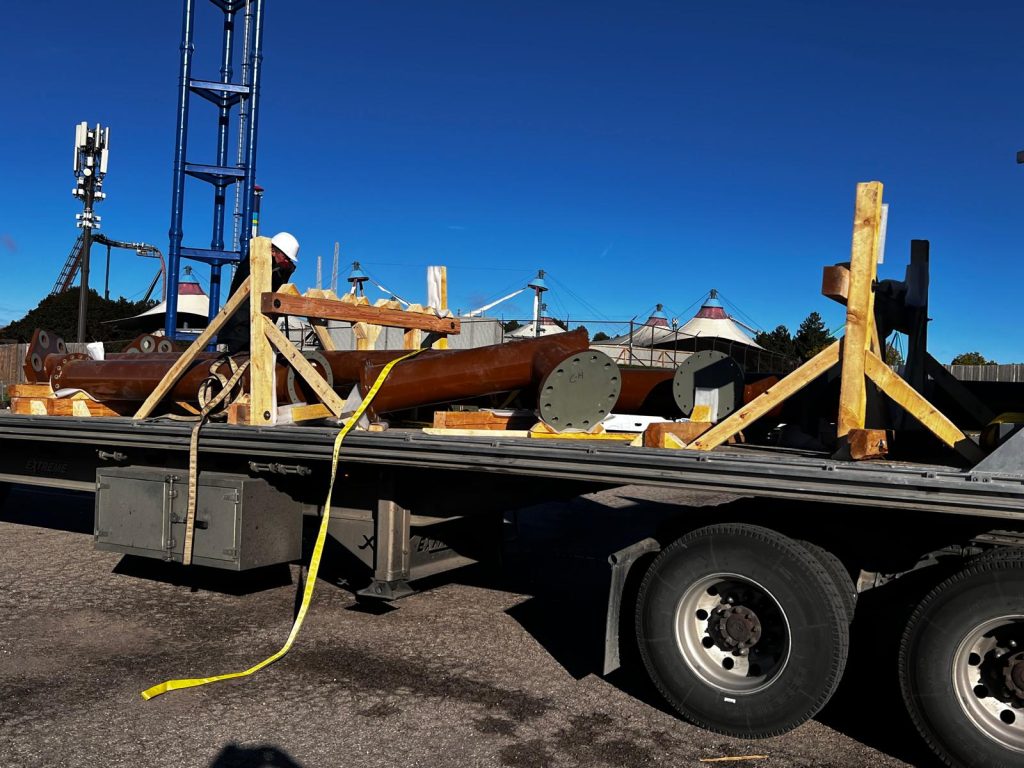
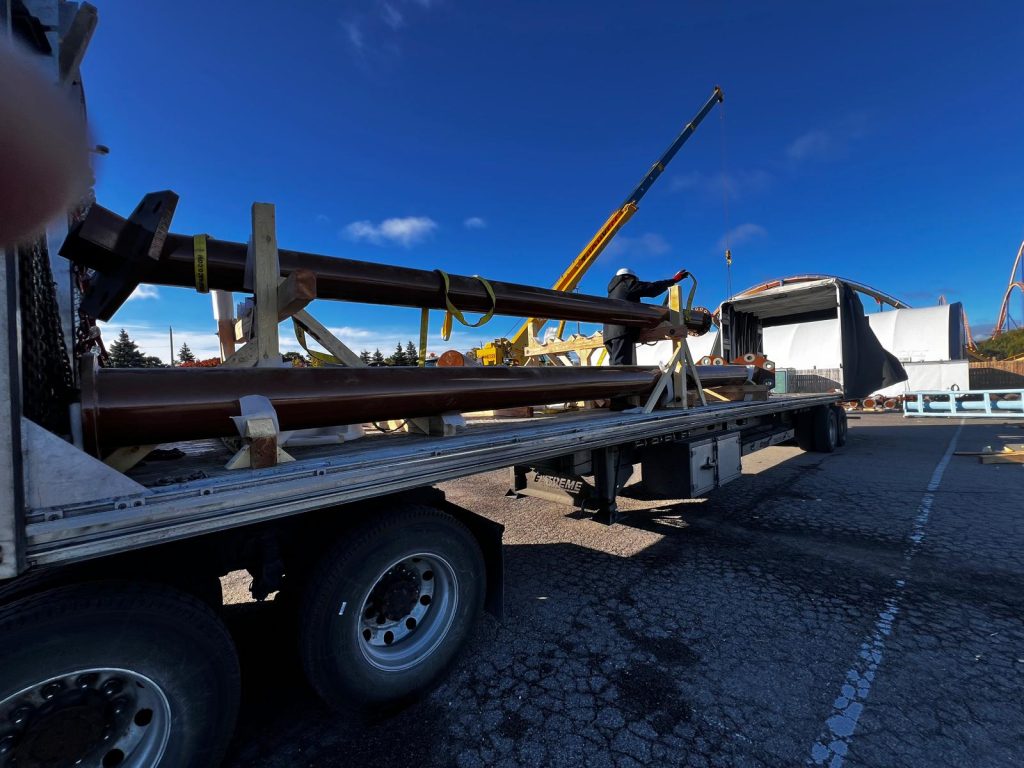
The cargo was not conventional palletized freight. Project photos show long fabricated sections, cylindrical structural members and larger assembled components transported on open-deck trailers.
Some of the longest pieces appear to measure approximately 45 feet, making cargo positioning, support and destination unloading important considerations in the transportation plan.
Based on the project photography, the shipment involved approximately two flatbed loads, with an estimated combined cargo weight of roughly 40,000 lb.
The transportation itself was only one part of the job. Once the freight reached Canada’s Wonderland, the individual components had to be transferred from the trailers into the worksite using a mobile crane.
Flatbed equipment was well suited to this project because the freight consisted of long fabricated components that needed to remain accessible during loading and unloading.
Unlike an enclosed trailer, an open deck provides access from the sides and above. That became particularly important at Canada’s Wonderland, where the components were removed directly from the trailers using a crane.
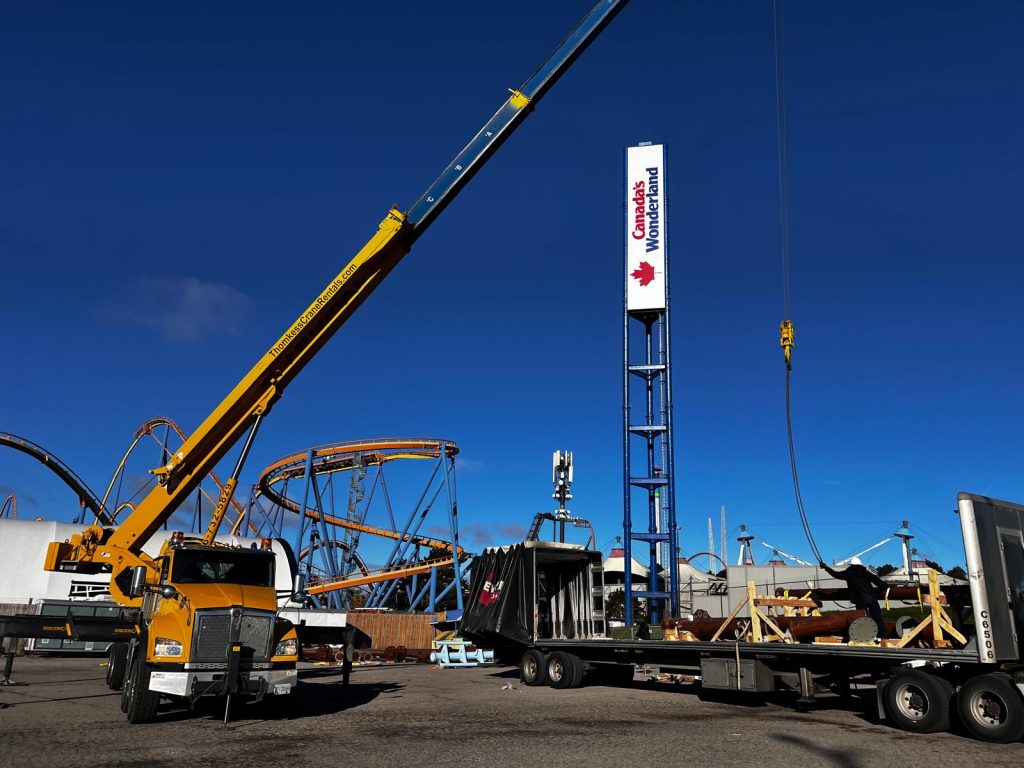
Project photos show the cargo positioned on substantial timber supports and blocking. Different components were separated and supported individually across the trailer decks.
The configuration also allowed the on-site lifting crew to access individual pieces during unloading rather than requiring the entire load to be removed at once.
For project freight like this, trailer selection therefore affects more than transportation. It also influences how efficiently the receiving team can handle the cargo once it arrives.
Just Ship It Logistics arranged the specialized flatbed transportation around the requirements of the freight and the destination.
The cargo needed to arrive at a location where a mobile crane and receiving crew could access the trailers and unload individual components.
This meant the delivery had to account for several connected parts of the operation:
The original project photos document the final stages of this process, from the loaded trailers arriving at the site to individual components being lifted and placed in the designated work area.
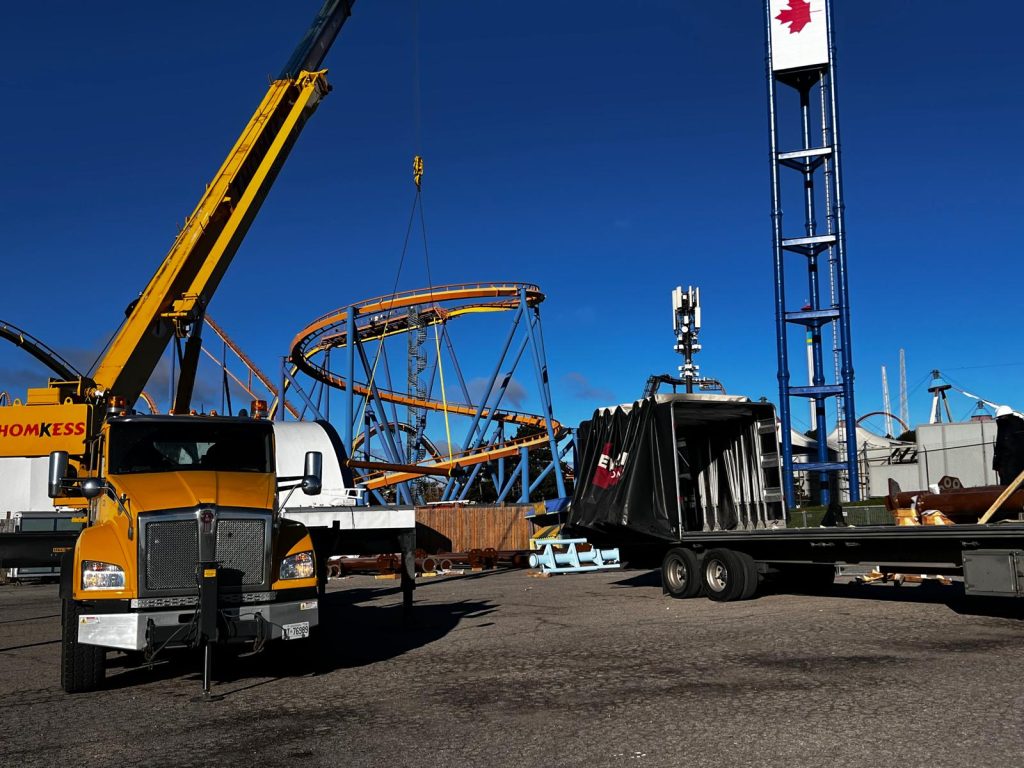
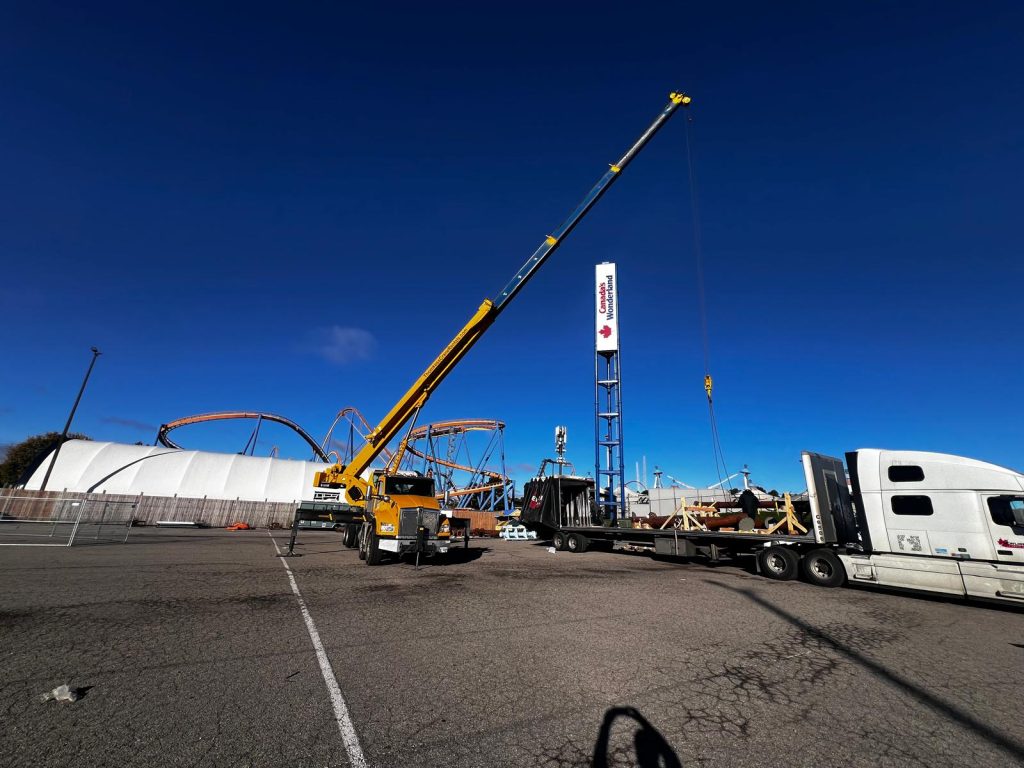
The most visually distinctive part of the project was the crane-assisted unloading operation. A mobile crane was positioned beside the flatbed trailers within the Canada’s Wonderland worksite. Individual components were prepared for lifting and then removed from the trailer one piece at a time.
The project photography captures several stages of the operation.
Some images show fabricated components still positioned on their timber supports on the trailer. Others show individual pieces suspended from the crane during unloading. Later photographs show multiple long components already staged on the ground while the remaining freight continues to be removed.
This sequence demonstrates why the unloading method needs to be considered before specialized freight leaves its origin.
A truck arriving on time is only part of a successful project delivery. The trailer configuration, cargo positioning, lifting requirements, receiving equipment and available work area all need to work together.
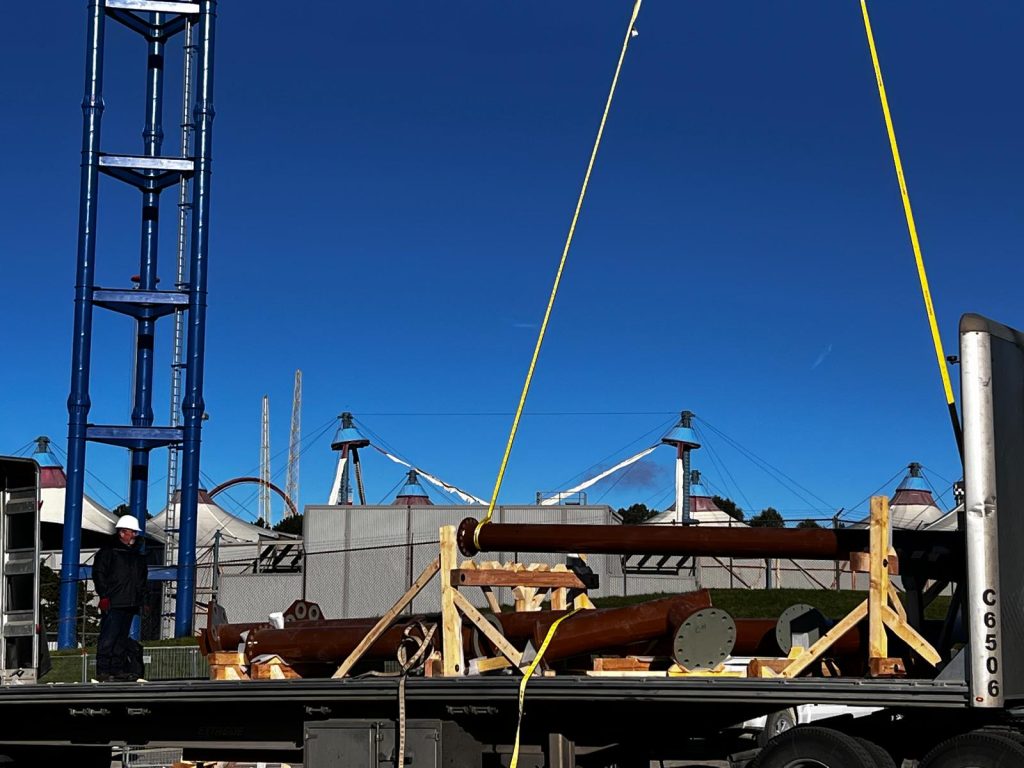
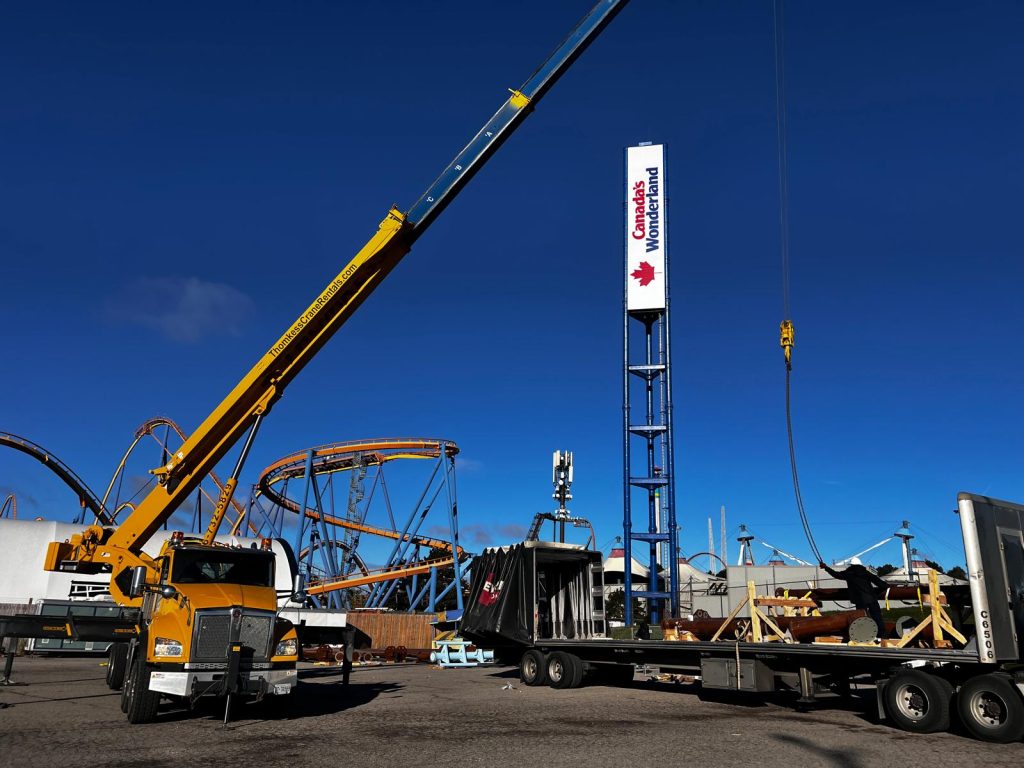
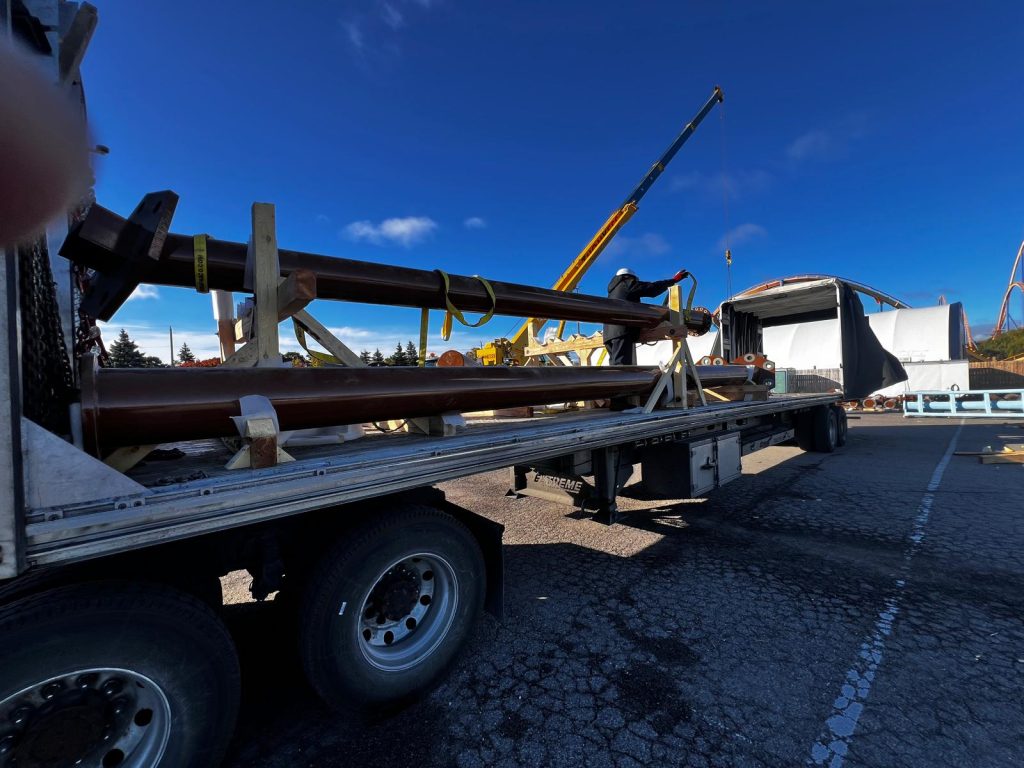
One of the main considerations was completing the unloading operation within an established amusement-park environment rather than at a conventional warehouse or distribution centre.
The project photos show the unloading area surrounded by existing Canada’s Wonderland infrastructure, including ride structures, fencing and other site features.
That environment meant the final stage required enough space not only for the flatbed trailers but also for a mobile crane and the controlled movement of long components from the trailers to the staging area.
Another consideration was the cargo itself.
The shipment included pieces of different lengths, shapes and configurations. Some were long structural members, while others were larger fabricated assemblies supported in timber cradles.
Instead of treating the freight as a uniform load, the unloading operation had to handle the components individually.
The transportation and unloading stages were treated as connected parts of the same delivery.
Open-deck trailers provided overhead access to the freight, while the crane could work alongside the trailers and remove the components individually.
This allowed each piece to be lifted from its transport position and transferred directly into the worksite. The photographic sequence also shows components being staged on the ground as unloading progressed. This created a controlled transition from transportation – lifting – site staging, rather than simply dropping freight at a receiving dock.
For specialized project freight, planning that final handoff can be just as important as selecting the transportation equipment.
The approximately two flatbed loads of fabricated components were delivered to the Canada’s Wonderland project site in Vaughan in August 2026.
The components were then unloaded using a mobile crane and staged within the work area for the next phase of the project.
The original photography documents the freight on the trailers, crane-assisted lifting, and components positioned at destination.
For Just Ship It Logistics, the project demonstrates experience coordinating specialized freight where transportation needs to integrate with the receiving site’s equipment and operational requirements. What
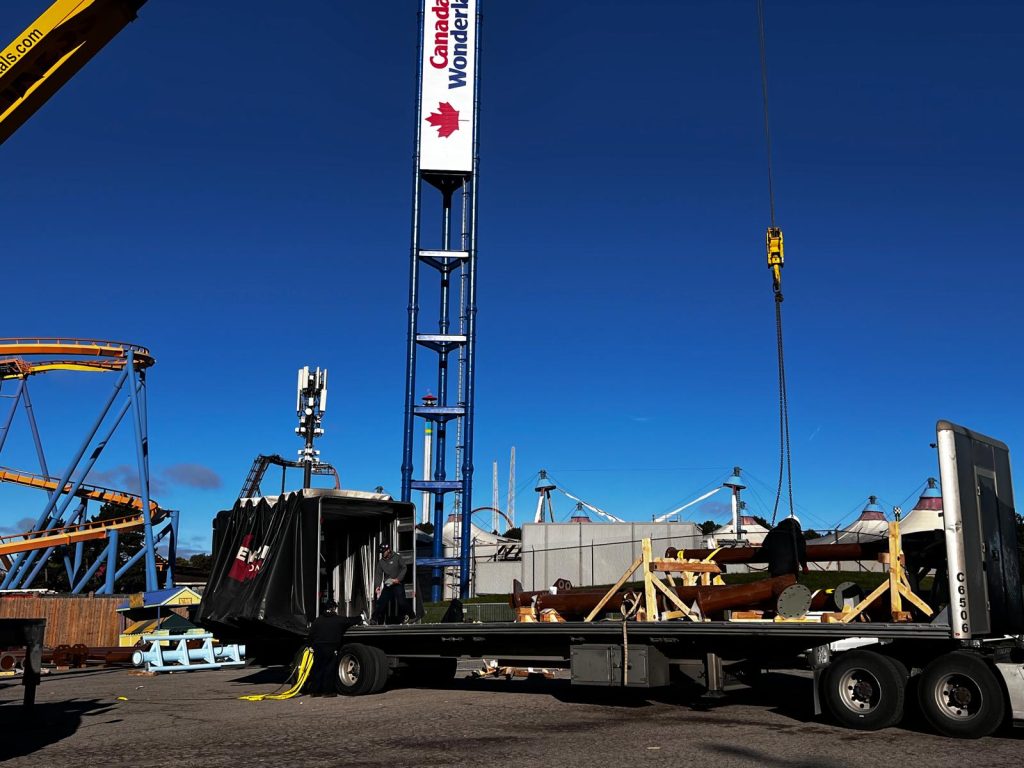
A specialized flatbed shipment should be planned around more than the distance between origin and destination.
When long fabricated steel, structural components, machinery or similar project freight requires crane unloading, the destination operation should influence the transportation plan from the beginning.
Before arranging the shipment, shippers should establish accurate cargo dimensions and weights, identify appropriate trailer equipment, understand how each component can be accessed for lifting, and confirm what unloading equipment will be available at destination.
Site conditions matter as well. A construction site, industrial facility or entertainment property may have very different access constraints from a conventional loading dock.
For crane-assisted deliveries, the truck arrival window and receiving operation should also be coordinated so the trailer does not arrive without the equipment or personnel needed to unload it.
The Canada’s Wonderland project demonstrates an important principle for specialized freight: delivery planning does not end when the truck reaches the destination. It ends when the freight can be successfully handed over at the site.